Landscape Design

Landscape Design
Table of Content

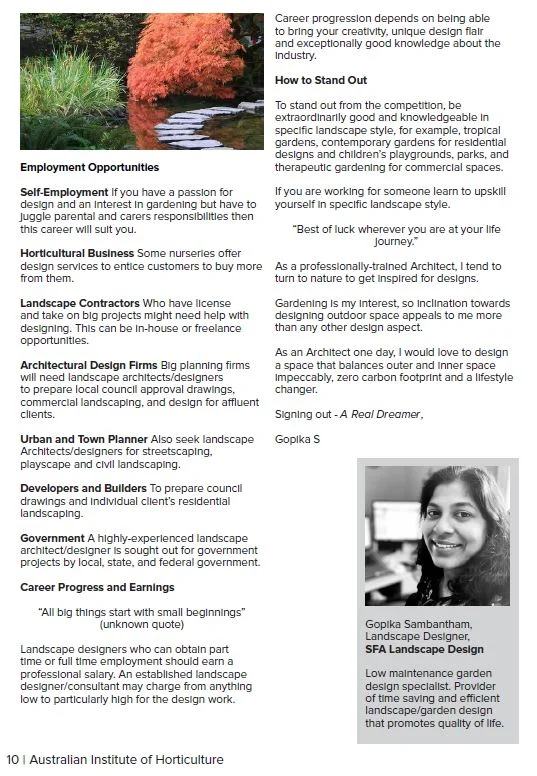
Hortinsights ,magazine of Australian Institute of Horticulture,which is the peak body in promoting horticulture best practice in Australia has published my article about the landscape design profession as career path.Read the below magazine to know more(pg 9 and 10).View the publication at AIH

Read also Peaceful Garden Ideas.
Frequently Asked Questions

Landscape design costs in Sydney typically range from $2,000 to $10,000 depending on project size, designer experience, and complexity. Basic concept plans may start around $2,000–$3,500, while comprehensive designs including detailed drawings, 3D renders, and plant schedules can exceed $8,000. Larger properties, sloped sites, or luxury outdoor features increase pricing. Consultation-only services may cost $150–$300 per hour. The final investment depends on customization, materials, and construction scope.

Landscape designers in Sydney generally earn between $70,000 and $110,000 per year, depending on experience and qualifications. Entry-level designers may earn around $65,000 annually, while senior designers or those running their own studios can exceed $120,000. Income also varies based on residential versus commercial projects, portfolio strength, and client base. Freelance designers may charge hourly rates between $80 and $150, influencing overall earnings significantly.

The cheapest landscaping options focus on simplicity and low maintenance. Using native plants, mulch instead of turf, gravel pathways, and DIY planting significantly reduces costs. Repurposing materials like recycled bricks or timber also helps. Avoid complex irrigation systems and high-maintenance lawns to save money long term. Minimalist designs with drought-tolerant plants are affordable and sustainable. Starting with small improvements and expanding gradually is often the most budget-friendly approach.

Landscaping does not need to be symmetrical to look attractive. While symmetry creates formal, structured gardens, asymmetrical designs often feel more natural and relaxed. Many modern landscapes use balance rather than strict symmetry, combining different plant heights, textures, and focal points creatively. Informal layouts suit Australian gardens particularly well, especially native or coastal styles. Ultimately, the best design depends on personal preference, property architecture, and intended outdoor atmosphere.

Continue Reading