
How to Design Around Existing Trees is all about blending nature’s beauty with functional garden design. Mature trees can be the crown jewel of your yard, offering shade, structure, and character. Whether you’re working with evergreens, deciduous varieties, or palms, the goal is to enhance their presence while protecting their health. From clever underplanting to hardscape features, designing around trees allows you to create a stunning, cohesive outdoor space that respects the life and history of these natural treasures.
Every Home, It is Said, Needs a Tree.
We love trees in summer for their shade and breeze, in spring for their love of life, in autumn for their colourful show, and in winter for their bare beauty. Trees are a distinguishing factor in well-established and sought-after suburbs, whether lining the streets or adding maturity and character to homes. If you happen to buy your dream home in such a suburb, learning How to Design Around Existing Trees will help you make the most of their beauty.
Designing with Mature Trees: Pro and Cons
A mature tree can be a hindrance or an asset, depending on your mindset and the type of tree you have. Mastering How to Design Around Existing Trees starts with knowing their benefits and limitations.
Pros:
- They add character to the garden.
- The bare trunk can give a sculpted, dramatic look when highlighted.
- You can underplant (add free mulch to suppress weeds).
- They keep surroundings cool during summer.
Cons:
- They often have extensive root systems; damaging roots can harm the tree.
- An arborist can help identify and fix issues—an investment worth making.
- Local council approval may be needed before removing mature trees.
If you’re working with a limited budget, How to design around existing trees on a budget can include affordable ideas like mulching, simple stone edging, and low-maintenance underplanting.
Designing with Evergreen Trees
If you have an evergreen tree, the type and amount of shade it casts will guide your landscaping choices.
- Choose shade-tolerant plants like ferns for underplanting.
- The soil under pine trees is acidic—perfect for hydrangea, azalea, or liriope.
- Since evergreens provide year-round shade, seating beneath them can be ideal.
You might also explore Landscaping around trees with bricks to create attractive borders without disturbing the roots.
Designing with Deciduous Trees
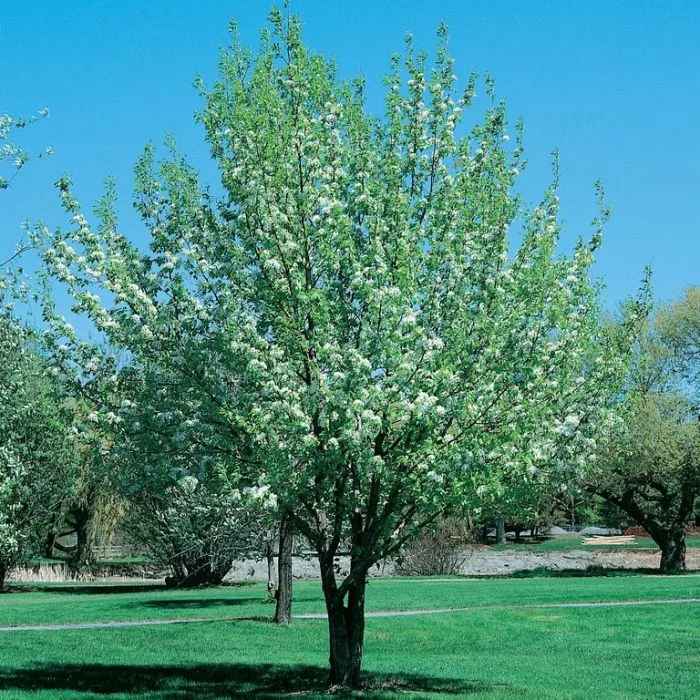
Deciduous trees are appealing because they offer interest all year. When you’re planning How to Design Around Existing Trees, these trees offer versatility.
- Plant part-shade species underneath.
- Highlight the tree as a garden centrepiece.
- Install garden lights at dusk for instant enhancement.
To elevate the look, you can try Tree landscaping ideas front yard approaches, incorporating seasonal flowers or decorative stones for added charm.
Designing with Palm Trees
Palm trees have shallow roots, so treat the space underneath with care.
- Create a block or stone wall around them for a striking effect.
- Layer plant varieties to soften their structured look.
- Add more palm species to build a tropical feel.
If you’re wondering How to landscape around a tree with exposed roots, palms require surface-level planting or decorative hardscape elements to avoid damage.
Hardscape Design Features Underneath your Tree
Many hardscape features can work under existing trees, provided roots remain unharmed and enough space is left for nutrients.
- Add a stone bench or wall for seating.
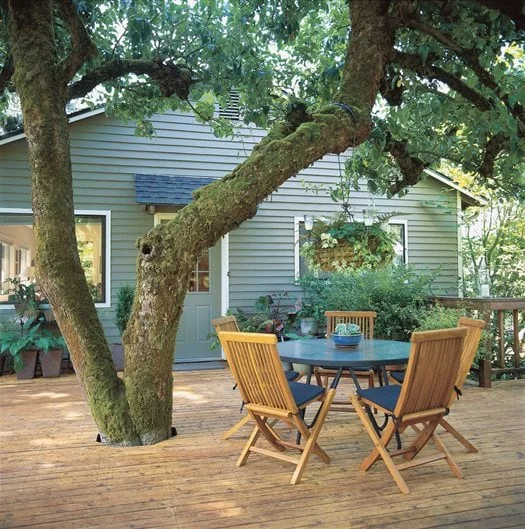
- Build a deck for a natural blend with the tree.
- Create a paved dining area.
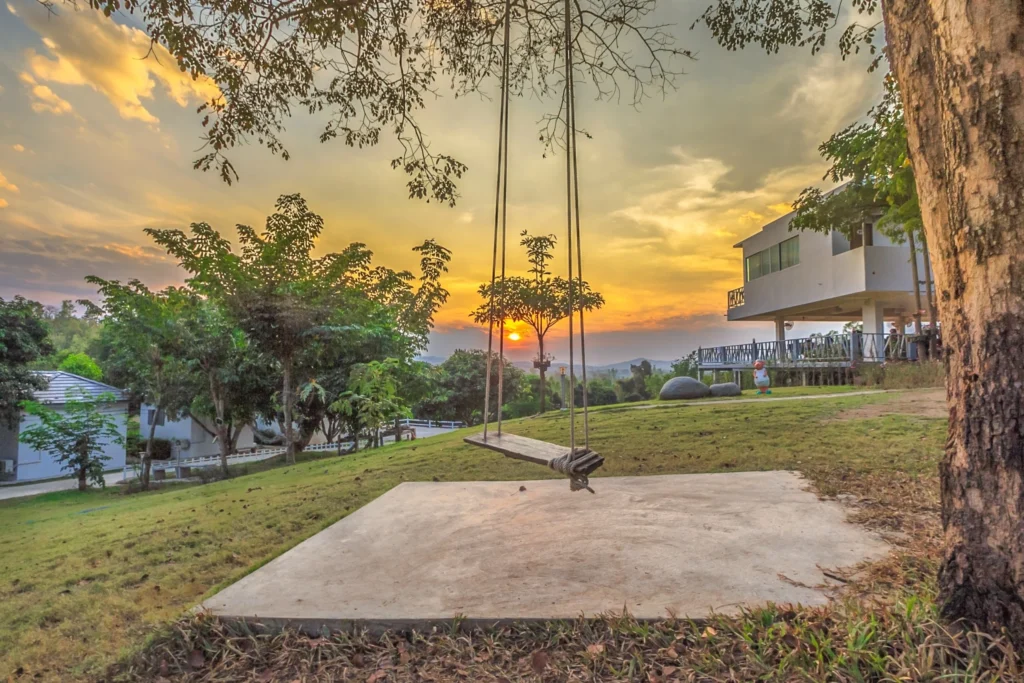
- Hang a chair or swing from strong branches.
Landscaping ideas around trees with rocks can also create a clean, low-maintenance solution while protecting root zones. Combining Tree ring landscaping ideas with layered planting can make the space both functional and beautiful.
Budget-Friendly & Creative Touches
Sometimes the simplest designs are the most impactful. If you’re thinking about How to design around existing trees on a budget, try using recycled materials, mulch rings, or native plants to reduce watering costs. Adding Landscaping around trees with bricks or Tree landscaping ideas front yard can be achieved with affordable edging and clever planting choices.
Preparing for Landscaping Around Trees
Landscaping around trees adds charm while preserving tree health. When thinking about how to design around existing trees, focus on shade-tolerant plants, proper mulching, and creative edging. Affordable approaches like how to design around existing trees on a budget often include mulch, native plants, or landscaping around trees with bricks or rocks.
- Choose suitable plants: Use shade-loving ground covers like hostas or ferns and low-maintenance native plants that thrive with minimal care.
- Use effective techniques: Apply mulch for moisture retention, or frame the base with bricks or decorative rocks for definition.
- Avoid common mistakes: Don’t plant too close to the trunk, pile excess soil on roots, or damage roots during planting.
Choosing Suitable Plants
Selecting plants that thrive beneath trees is essential, as shade and root competition can make growth challenging. When considering landscaping around trees ideas, choose plants that are shade-tolerant, have shallow roots, and require minimal water once established.
- Shade-loving ground covers such as hostas, liriope, or ferns adapt well to reduced sunlight. These plants spread evenly, filling bare spaces without competing aggressively with tree roots.
- Native plants are an excellent option because they naturally adjust to local soil and climate. Incorporating natives can minimize maintenance and ensure year-round greenery.
- Layered planting strategies enhance depth and texture. Small shrubs, perennials, and ground covers arranged around a tree provide visual balance while complementing the tree’s form.
- Seasonal color plants like impatiens or caladiums can brighten shaded areas. Using these thoughtfully adds vibrancy without overwhelming the tree’s natural beauty.
Techniques on How to Landscape Under Trees
Creating a welcoming and sustainable design requires techniques that protect the tree’s health while improving the space’s visual appeal. If you are thinking about how to design around existing trees on a budget, creative use of materials like mulch, rocks, or bricks can offer both affordability and style.
- Mulching around the base is one of the most effective approaches. A thick but breathable mulch layer helps conserve moisture, reduce weeds, and protect exposed roots. Keep mulch 2–3 inches away from the trunk to prevent rot.
- Raised beds should be avoided, but shallow planting areas can be created by gently layering soil between roots. These should not exceed 2–3 inches in depth to avoid suffocating the tree’s roots.
- Using edging materials like bricks or stones creates defined borders. Landscaping around trees with bricks provides a clean, classic appearance, while landscaping ideas around trees with rocks add a rustic or natural touch.
- Pathways or seating areas under large trees can maximize utility. Instead of planting directly under dense canopies, installing stone or gravel paths allows for functional, low-maintenance spaces.
Common Mistakes to Avoid When Landscaping Around Trees
While the results can be beautiful, there are frequent mistakes that homeowners should avoid to protect the longevity of their trees.
- Planting too close to the trunk suffocates the base and creates competition for vital nutrients. Always maintain a clear ring of soil or mulch around the trunk to ensure airflow and prevent decay.
- Overplanting with aggressive species such as ivy or fast-spreading ground covers can overwhelm tree roots. These plants may also climb the trunk, causing bark damage.
- Ignoring root health by cutting or damaging roots during installation can severely harm or destabilize a tree. Always design around the natural root system instead of forcing modifications.
- Excessive soil buildup around roots is a major issue. Covering roots with deep soil layers can restrict oxygen, leading to decline in tree health.
- Using heavy materials directly on roots without proper leveling or support can compact the soil, suffocating the tree and reducing water absorption.
Conclusion
How to Design Around Existing Trees is both an art and a science. It involves understanding your tree’s needs, working with its natural features, and blending it into your garden design. Whether you choose lush underplanting, Landscaping ideas around trees with rocks, or elegant Tree ring landscaping ideas, the goal is to respect the tree while enhancing your outdoor space. Remember, the shade you enjoy today exists because someone cared for that tree long ago—so design with the same care for the future.